
What is CNAPP?
Cloud-Native Application Protection Platform (CNAPP) is a unified security solution that protects modern applications throughout the entire development lifecycle, from code to cloud runtime. It consolidates previously separate tools like CSPM, CWPP, and CIEM into a single platform, replacing fragmented dashboards with unified visibility across infrastructure misconfigurations, workload vulnerabilities, identity risks, and runtime threats.

CNAPP Defined
Think of building a secure house. In the past, you might have hired different experts for the foundation (infrastructure), the walls (workloads), and the locks (identity). This made things complicated and left gaps.
CNAPP is like hiring one expert security contractor who handles the core security lifecycle: checking the blueprints (IaC), making sure materials are safe (code), watching the security cameras (CSPM), and protecting the people inside (CWPP and CIEM).
In tech, CNAPP is a framework that combines different security tools needed for cloud-native apps built with microservices, containers, serverless functions, and Infrastructure-as-Code (IaC). It gives a single view of risk across development, deployment, and runtime, so security and DevOps teams can manage protection from one place.
Why CNAPP Became Necessary
The need for CNAPP arose from the fragmented nature of traditional cloud security tools. In the early days of cloud adoption, organizations used point solutions - CSPM for configuration drift, CWPP for runtime assets, and separate tools for secrets, code scanning, and identity entitlements.
This approach created three major problems:
- Alert Fatigue: Each tool generated its own set of alerts, often overlapping or contradictory, making it impossible for analysts to prioritize the true risks.
- Siloed Visibility: Teams had to switch between five or six different dashboards, losing context and slowing down investigation time.
- The "DevOps Gap": Most tools were bolted on after deployment, failing to keep pace with rapid development cycles. Security was reactive, not proactive.
CNAPP was created to fix this fragmentation. By combining these tools, it can link a vulnerable piece of code (found by an IaC scanner) with the over-privileged identity that deployed it (found by CIEM) and the misconfigured cloud resource it runs on (found by CSPM) - creating a full risk story that makes fixes clear and actionable.
Core Components of CNAPP
CNAPP is known for its full-lifecycle approach, bringing together several key technologies:
| Component | What It Does | Why It Matters |
|---|---|---|
CSPM(Cloud Security Posture Management) |
Continuously monitors cloud resource configurations (S3 buckets, security groups, cloud services) against security best practices and compliance standards. | Guards against the number one cause of cloud breaches: misconfigurations. |
CWPP(Cloud Workload Protection Platform) |
Protects runtime compute environments including VMs, containers, and serverless functions. Handles vulnerability management, malware protection, and application control. | Secures running application components against active threats. |
CIEM(Cloud Infrastructure Entitlement Management) |
Manages and monitors the permissions and entitlements of human and machine identities in the cloud. Enforces the principle of least privilege. | Addresses the risk of over-privileged identities, which attackers exploit for lateral movement. |
IaC Scanning(Infrastructure as Code) |
Scans configuration files (Terraform, CloudFormation, Ansible) in the source code repository for security policy violations, vulnerabilities, and misconfigurations before deployment. | This is a key "shift left" capability - catching flaws at the blueprint stage. |
| Vulnerability Scanning | Identifies known software flaws (CVEs) in application code, container images, and operating system packages. | Ensures deployed assets do not contain easily exploitable weaknesses. |
| Secret Scanning | Looks for hardcoded secrets, API keys, and access tokens within source code and configuration files. | Prevents sensitive credentials from being leaked and misused. |
How CNAPP Works in Real-World Cloud Environments
CNAPP follows an integrated, full-lifecycle model to secure cloud-native applications across three stages:
Shift Left (Pre-Deployment)
The process starts in the developer's environment. When a developer writes Infrastructure as Code (IaC) or updates a container image, the CNAPP platform performs automatic scans.
Example: A DevOps engineer commits a Terraform file that would create an S3 bucket exposed to the public internet. The CNAPP's IaC scanner immediately flags this policy violation in the pull request - so the developer can fix it before the code ever reaches the cloud.
Posture Management (Continuous Monitoring)
Once deployed, the CSPM component continuously monitors the entire cloud environment (AWS, Azure, GCP, or multi-cloud) to ensure resources comply with security policies.
Example: A team member is given overly broad IAM permissions. The CIEM component detects this "excessive entitlement" and generates a specific alert, often offering automated remediation to downgrade the permission to the necessary minimum.
Runtime Protection (Live Defense)
The CWPP component monitors running workloads, providing threat detection and response.
Example: A container in production is accessed by an attacker via a zero-day exploit. The CWPP module detects anomalous process behavior - such as the container attempting to spawn an unexpected shell or communicate with a suspicious external IP - and can automatically block the connection or isolate the workload.
By combining these three stages, a single CNAPP platform can map risk from the initial line of code to an active threat in production.
Benefits of CNAPP
Adopting a CNAPP approach offers significant advantages over fragmented, siloed security tools:
- Unified Risk Context: Instead of 20 separate alerts, you get one prioritized risk score - for example: "This vulnerable container was deployed by an over-privileged account and runs on a publicly exposed network." This makes it far easier to prioritize action.
- Faster Remediation ("Shift Left"): Finding and fixing vulnerabilities during coding is much cheaper and faster than after deployment. CNAPP puts security directly into the CI/CD pipeline, matching security checks with DevOps workflows.
- Reduced Operational Overhead: Combining multiple tools into a single platform means fewer licenses to manage, fewer integrations to maintain, and less analyst training required.
- Improved Compliance and Auditing: CNAPP provides continuous monitoring against major compliance frameworks (PCI DSS, HIPAA, SOC 2), making it simpler to demonstrate security controls are in place during an audit.
Common Challenges and Misconceptions About CNAPP
While CNAPP is a powerful evolution in cloud security, it is not a silver bullet. Here are the most common misconceptions and real-world challenges:
Misconceptions
- Misconception 1: CNAPP is just
CSPMandCWPPcombined. While it includes them, CNAPP is defined by its ability to integrate them, add "shift left" capabilities (IaCscanning), and focus on identity (CIEM). The real value is the correlation of data across all these domains. - Misconception 2: CNAPP replaces all existing security tools. CNAPP aims to consolidate overlapping tools, but highly specialized tools (such as certain WAFs or dedicated log analysis platforms) may still be necessary for specific edge cases.
Challenges
- Integration Depth: The true value depends on how well the components are integrated. A platform that merely offers five separate dashboards is not a true CNAPP - it must provide unified data and correlation engines.
- Developer Friction: Implementing "shift left" tools in the CI/CD pipeline, particularly
IaCscanning, must be done carefully to avoid slowing down developer velocity. Security checks must be fast, accurate, and relevant.
Who Should Consider Using CNAPP
If your organization matches any of these profiles, CNAPP should be a key part of your cloud security strategy:
- Cloud-Native Adopters: Organizations heavily using modern architectures like microservices, Kubernetes, containers, and serverless functions. Traditional security models are fundamentally ill-suited for these dynamic environments.
- DevSecOps Practitioners: Teams that want to truly embed security into their development lifecycle - moving beyond reactive security scans to proactive, preventative controls.
- Multi-Cloud Environments: Companies operating on two or more major cloud providers (e.g., AWS and Azure). CNAPP provides a single pane of glass to manage security posture across disparate environments.
- Organizations Struggling with Alert Overload: If your security operations team is overwhelmed by non-prioritized alerts from multiple point products, CNAPP's risk correlation and prioritization engine will be transformative.
CNAPP vs. CSPM: Key Differences
The most common comparison is between CNAPP and CSPM, as both focus on posture management. However, they address fundamentally different scopes:
| CSPM | CNAPP | |
|---|---|---|
| Primary Focus | The Cloud (IaaS/PaaS configuration, compliance, resource inventory) | The Application Lifecycle (Code, Build, Deploy, Runtime) |
| Main Scope | Cloud service configurations (S3 buckets, IAM roles, network settings) | Configurations, IaC code, workloads (containers/VMs), and identity entitlements |
| Where It Operates | Primarily post-deployment (in the cloud account) | Across the entire lifecycle (Repo, CI/CD pipeline, and Cloud account) |
| Key Output | Alerts on configuration drift and compliance failures | Correlated risk scores linking code vulnerabilities to cloud misconfigurations and identities |
In short, CSPM is a foundational pillar of CNAPP - but CNAPP represents a full-stack evolution that secures the entire application development and deployment process, not just the resulting cloud configuration.
To see CSPM in practice - running CIS compliance benchmarks against a live AWS environment, triaging findings in Security Hub, discovering secrets in Lambda functions, and building automated remediation workflows - try the Remediate Risks with Prowler and AWS Security Hub lab on Pwned Labs.
Related Labs
See CNAPP concepts in action with hands-on cloud security tooling:
- Remediate Risks with Prowler and AWS Security Hub - Run Prowler security assessments, aggregate findings in AWS Security Hub, discover secrets exposed in Lambda functions, and build automated remediation workflows that mirror real CNAPP functionality.
- Remediate Vulnerabilities with Amazon Inspector - Use Amazon Inspector to scan ECR container images and Lambda functions for software vulnerabilities and code issues, triage findings against false positives, and remediate command injection and SQL injection flaws in serverless code.
Frequently Asked Questions
What is the primary difference between CNAPP and DevSecOps?
DevSecOps is a cultural and process approach that adds security throughout software development. CNAPP is a technical platform - a set of integrated tools - that helps make DevSecOps practical and scalable in cloud-native settings. CNAPP is essentially the engine that powers DevSecOps cloud security.
Does CNAPP secure traditional on-premises data centers?
Usually not. CNAPP is designed for cloud-native environments, focusing on public cloud infrastructures (IaaS, PaaS, containers, serverless) and their development pipelines. For traditional on-premises data centers, methods like data center security and endpoint protection are typically more appropriate.
How does CNAPP help with vulnerability management?
CNAPP improves vulnerability management by making it continuous and context-aware. It scans container images, code dependencies, and runtime components for vulnerabilities - and, importantly, uses cloud security posture data (CSPM) to prioritize which vulnerabilities matter most. For example, a serious vulnerability is flagged with higher urgency if the affected workload is exposed to the internet.
What key components make up a Cloud-Native Application Protection Platform?
The core components of a CNAPP include Cloud Security Posture Management (CSPM), Cloud Workload Protection Platforms (CWPP), Cloud Infrastructure Entitlement Management (CIEM), and Infrastructure-as-Code (IaC) scanning. These are unified to provide a complete view of risk from code to runtime.
Is CNAPP a single product or a collection of tools?
CNAPP is a unified platform that combines capabilities from separate tools like CSPM and CWPP. While many vendors offer CNAPP products, the goal is a single, integrated platform with one control panel and shared data store - not a bundle of unconnected tools.
Learn this hands-on in a bootcamp
Train, certify, prove it
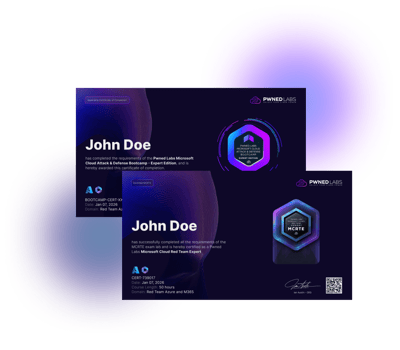
Our bootcamps combine expert-led instruction with real cloud environments. Complete the training, pass the exam, and earn an industry-recognized certification.
What practitioners say.
Caleb Havens
Red Team Operator & Social Engineer, NetSPI
"I’ve attended two training sessions delivered by Pwned Labs: one focused on Microsoft cloud environments and the other on AWS. Both sessions delivered highly relevant content in a clear, approachable manner and were paired with an excellent hands-on lab environment that reinforced key concepts and skills for attacking and defending cloud infrastructures. The training was immediately applicable to real-world work, including Red Team Operations, Social Engineering engagements, Purple Team exercises, and Cloud Penetration Tests. The techniques and insights gained continue to be referenced regularly and have proven invaluable in live operations, helping our customers identify vulnerabilities and strengthen their cloud defenses."
Sebas Guerrero
Senior Security Consultant, Bishop Fox
"The AWS, Azure, and GCP bootcamps helped me get up to speed quickly on how real cloud environments are built and where they tend to break from a security standpoint. They were perfectly structured, with real-world examples that gave me rapid insight into how things can go wrong and how to prevent those issues from happening in practice. I’m now able to run cloud pentests more confidently and quickly spot meaningful vulnerabilities in customers’ cloud infrastructure.”
Dani Schoeffmann
Security Consultant, Pen Test Partners
"I found the Pwned Labs bootcamps well structured and strongly focused on practical application, with clear background on how and why cloud services behave the way they do and how common attack paths become possible. The team demonstrates both sides by walking through attacks and the corresponding defenses, backed by hands-on labs that build confidence using built-in and third-party tools to identify and block threats. The red-team labs are hands-on and challenge-driven, with clear walkthroughs that explain each step and the underlying logic. I’ve seen several of these techniques in real engagements, and the bootcamp helped me develop a repeatable methodology for cloud breach assessments and deliver more tailored mitigation recommendations."
Matt Pardo
Senior Application Security Engineer, Fortune 500 company
"I’ve worked in security for more than 15 years, and every step up came from taking courses and putting the lessons into practice. I’ve attended many trainings over the years, and Pwned Labs’ bootcamps and labs are among the best I’ve experienced. When you factor in how affordable they are, they easily sit at the top of my list. As a highly technical person, I get the most value from structured, hands-on education where theory is immediately reinforced through labs. Having lifetime access to recordings, materials, and training environments means you can repeat the practice as often as needed, which is invaluable. If you’re interested in getting into cloud security, sign up for Pwned Labs.”
Steven Mai
Senior Penetration Tester, Centene
“Although my background was mainly web and network penetration testing, the ACRTP and MCRTP bootcamps gave me a solid foundation in AWS and Azure offensive security. I’m now able to take part in cloud penetration testing engagements and have more informed security discussions with my team.”