
What Is AI Agent Security?
AI agent security is the practice of protecting AI agents, systems that use a language model to plan a goal and then act on it through tools, from attack and misuse. Because an agent turns model output into real actions such as calling an API, reading a file, or running a build, its security depends on controlling what the agent is allowed to do, not only what it is allowed to say. It covers direct and indirect prompt injection, excessive agency, tool and Model Context Protocol (MCP) abuse, identity and credential exposure, and the monitoring needed to detect an agent being steered off task.
How AI Agents Change the Attack Surface
An AI agent runs a loop: it reads a goal, decides on a step, calls a tool, reads the result, and repeats until the goal is met. That loop is what separates an agent from a chatbot. A chatbot returns text for a person to read. An agent produces actions that other systems carry out on its behalf, often with access to internal APIs, code repositories, cloud resources, and connected tool servers.
This introduces a trust boundary the model cannot see. The model decides which tool to call and with what arguments, but a separate server executes that call with real permissions. Persistent memory, multi-step execution, and broad access mean a single misleading instruction can become a chain of real actions, which is why an agent needs controls that traditional application security was not built for.
The Main Risks
The risks that matter most in practice fall into a few categories:
- Direct and indirect prompt injection. An attacker plants instructions in the user message, or inside content the agent retrieves such as a document, ticket, or web page, and the agent can follow them as if they came from its operator.
- Excessive agency. The agent is able to do more than the task requires, so a small compromise can reach high-value actions.
- Tool abuse and the confused deputy. The agent is steered into calling a sensitive tool, shaping its arguments, or chaining tools out of scope, using permissions the requester should not have.
- Supply chain and MCP exposure. Agents wired into CI/CD pipelines and Model Context Protocol tool servers inherit the trust of every server they connect to, so a poisoned tool description or a malicious server can redirect the agent.
- Identity and credential blast radius. An agent runs as an identity with secrets, environment access, and network egress, so compromising the agent can expose cloud credentials and data.
How We Secure AI Agents
Securing an agent is mostly platform and access-control work rather than a model setting. OWASP's AI Agent Security guidance frames the controls around least privilege on tools, prompt-injection defense, memory protection, output validation, and monitoring. In practice that means:
- Enforce authorization on the tool call, server-side, so the model is never the component deciding what is allowed. A check that lives only in the prompt or the user interface is a preference, not a control.
- Scope the agent's runtime identity tightly, default-deny network egress, and keep secrets and metadata out of its reach.
- Gate consequential actions, such as sending money, deleting data, or deploying code, behind a human approval step.
- Pin and verify MCP tool servers, and treat both retrieved content and tool output as untrusted input to check rather than trusted data.
- Log and correlate tool calls, identities, and pipeline actions, so an agent being driven off task is visible in telemetry.
Learn AI Agent Security Hands-On
Reading about these attacks is a start, and running them is how the ideas stick. Our AI Systems Attack & Defense Bootcamp teaches AI agent security by having you exploit and then defend live LLM-backed and agentic applications, covering indirect prompt injection, tool and MCP abuse, and the detections that catch them. It sits within our broader work on AI red teaming.
Learn this hands-on in a bootcamp
Train, certify, prove it
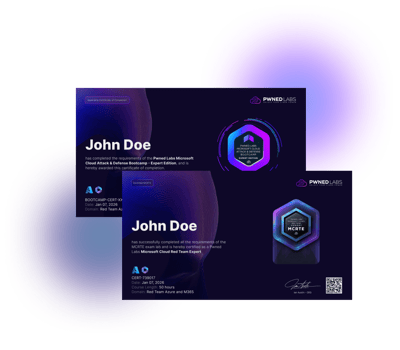
Our bootcamps combine expert-led instruction with real cloud environments. Complete the training, pass the exam, and earn an industry-recognized certification.
What practitioners say.
Caleb Havens
Red Team Operator & Social Engineer, NetSPI
"I’ve attended two training sessions delivered by Pwned Labs: one focused on Microsoft cloud environments and the other on AWS. Both sessions delivered highly relevant content in a clear, approachable manner and were paired with an excellent hands-on lab environment that reinforced key concepts and skills for attacking and defending cloud infrastructures. The training was immediately applicable to real-world work, including Red Team Operations, Social Engineering engagements, Purple Team exercises, and Cloud Penetration Tests. The techniques and insights gained continue to be referenced regularly and have proven invaluable in live operations, helping our customers identify vulnerabilities and strengthen their cloud defenses."
Sebas Guerrero
Senior Security Consultant, Bishop Fox
"The AWS, Azure, and GCP bootcamps helped me get up to speed quickly on how real cloud environments are built and where they tend to break from a security standpoint. They were perfectly structured, with real-world examples that gave me rapid insight into how things can go wrong and how to prevent those issues from happening in practice. I’m now able to run cloud pentests more confidently and quickly spot meaningful vulnerabilities in customers’ cloud infrastructure.”
Dani Schoeffmann
Security Consultant, Pen Test Partners
"I found the Pwned Labs bootcamps well structured and strongly focused on practical application, with clear background on how and why cloud services behave the way they do and how common attack paths become possible. The team demonstrates both sides by walking through attacks and the corresponding defenses, backed by hands-on labs that build confidence using built-in and third-party tools to identify and block threats. The red-team labs are hands-on and challenge-driven, with clear walkthroughs that explain each step and the underlying logic. I’ve seen several of these techniques in real engagements, and the bootcamp helped me develop a repeatable methodology for cloud breach assessments and deliver more tailored mitigation recommendations."
Matt Pardo
Senior Application Security Engineer, Fortune 500 company
"I’ve worked in security for more than 15 years, and every step up came from taking courses and putting the lessons into practice. I’ve attended many trainings over the years, and Pwned Labs’ bootcamps and labs are among the best I’ve experienced. When you factor in how affordable they are, they easily sit at the top of my list. As a highly technical person, I get the most value from structured, hands-on education where theory is immediately reinforced through labs. Having lifetime access to recordings, materials, and training environments means you can repeat the practice as often as needed, which is invaluable. If you’re interested in getting into cloud security, sign up for Pwned Labs.”
Steven Mai
Senior Penetration Tester, Centene
“Although my background was mainly web and network penetration testing, the ACRTP and MCRTP bootcamps gave me a solid foundation in AWS and Azure offensive security. I’m now able to take part in cloud penetration testing engagements and have more informed security discussions with my team.”