
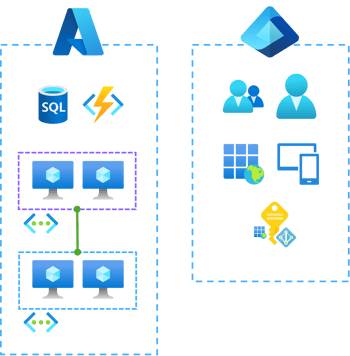
Expose privilege escalation paths, misconfigurations, and identity-based attack vectors
Our Entra ID testing evaluates your Azure Active Directory configuration for overly permissive role assignments, conditional access policy bypasses, and application consent grant abuse. We test service principal credentials, managed identity configurations, and cross-tenant access settings to identify paths attackers use to escalate privileges and move laterally across your Azure environment.
Microsoft cloud compromise is almost always an identity story. We map every path from the identities in scope to the permissions they can reach: Entra ID role assignments and the difference between what a role grants in the directory and what it grants in Azure Resource Manager, application and service principal permissions where an over-scoped API permission is effectively a standing backdoor, and consent grants that let an application act for a user indefinitely.
We test conditional access as it is actually enforced rather than as documented, including device and location exclusions, legacy authentication paths that bypass policy entirely, and the token replay opportunities that make multi-factor authentication less protective than assumed. Where hybrid join connects on-premises Active Directory to Entra ID, we test both directions, because that seam is where cloud compromise most often becomes domain compromise.
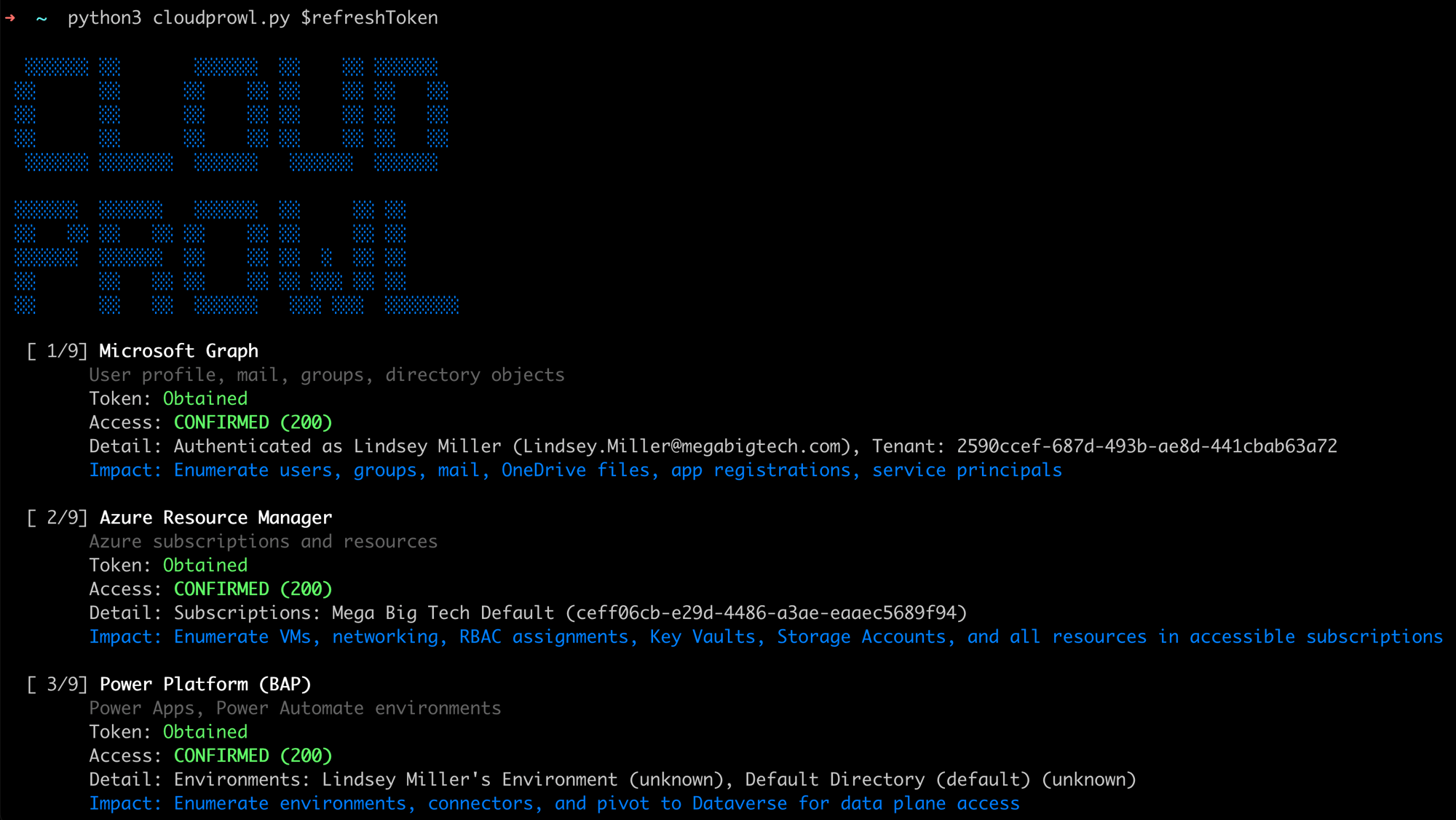
Test storage accounts, Key Vaults, App Services, and resource group configurations
We assess the security of your Azure resources including storage accounts with public blob access, Key Vault access policies and RBAC misconfigurations, App Service authentication bypasses, and resource group permission boundaries. Our testers identify exposed connection strings, misconfigured managed identities, and overly permissive shared access signatures that could lead to data exfiltration or lateral movement.
Resource-level findings are rarely a single misconfiguration. We look for the combinations that matter: storage accounts reachable through a shared access signature that outlives the person who issued it, containers set to anonymous access during a migration and never reverted, and Key Vaults whose access policies or RBAC assignments grant secret read to a managed identity attached to a workload anyone can influence.
App Services and Function Apps get particular attention because their managed identities are standing credentials. We test for secrets in application settings rather than Key Vault, deployment credentials and Kudu console exposure, and the route from application compromise to the instance metadata endpoint and on into the subscription.
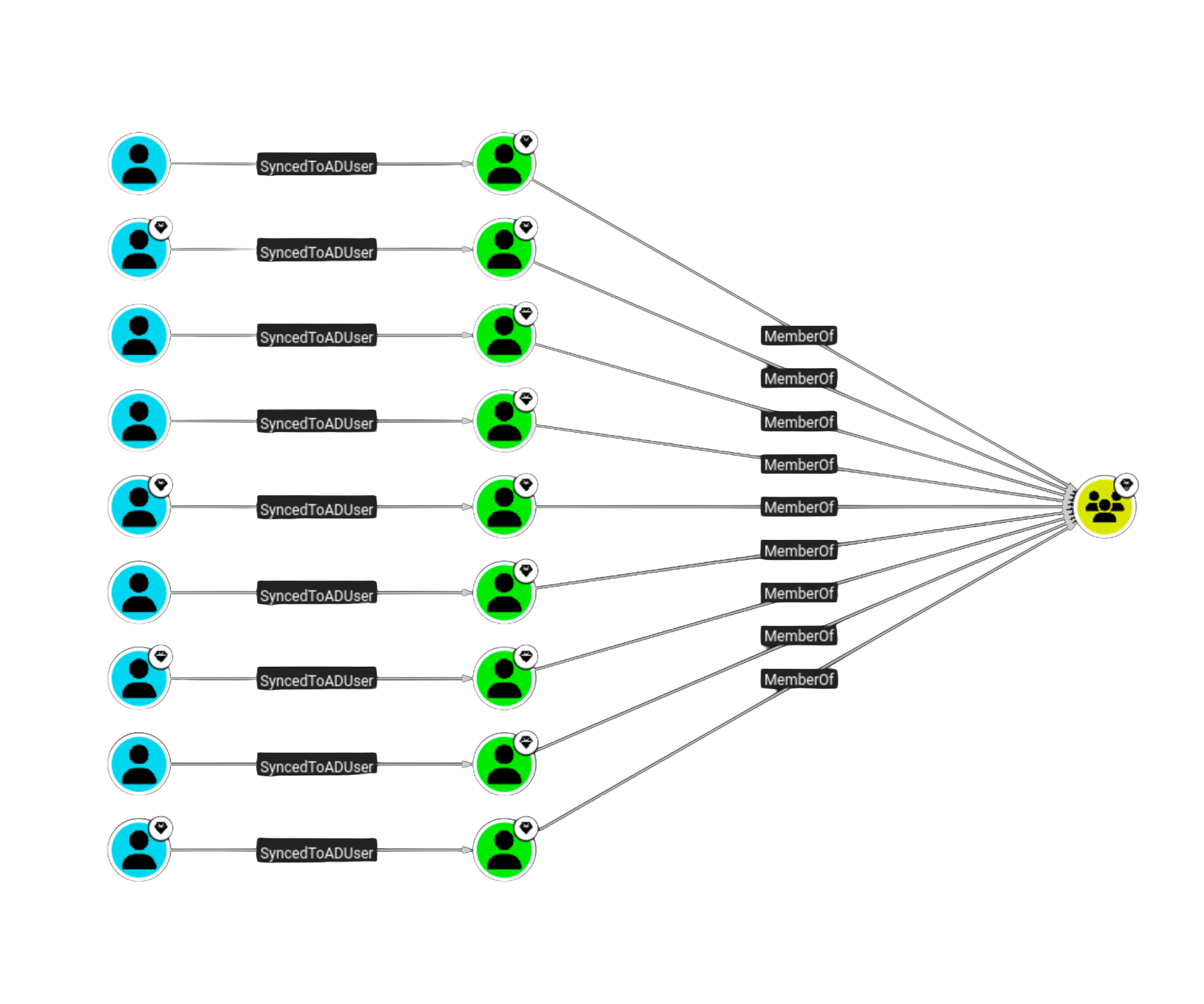
Assess VNet configurations, NSGs, Azure Firewall, and hybrid network connectivity
Our network security testing covers Virtual Network segmentation, Network Security Group rule analysis, Azure Firewall policy review, and Private Endpoint configurations. We evaluate ExpressRoute and VPN Gateway setups, test for cross-VNet lateral movement paths, and assess Azure DDoS Protection and Web Application Firewall configurations to ensure your network perimeter and internal segmentation meet security best practices.
Network controls in Azure are frequently assumed to be doing more than they are. We verify what network security groups and Azure Firewall actually block in practice, whether service endpoints and private endpoints are configured such that public access is genuinely closed rather than merely deprioritized, and whether peering and hub-and-spoke designs allow lateral movement between subscriptions that the architecture diagram implies are isolated.
We also test egress. Data leaving a subscription through a permitted service is a common exfiltration route precisely because it looks like normal traffic, and it is rarely covered by an inbound focused control set.
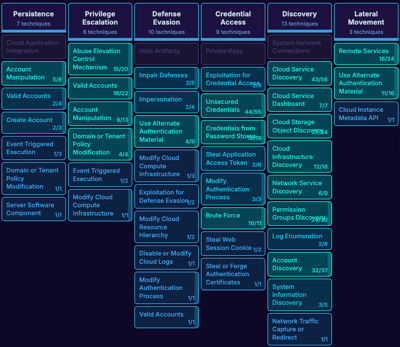
Structured, repeatable, and aligned with MITRE ATT&CK Cloud for Azure
Our Azure penetration testing methodology follows a structured approach aligned with PTES, OWASP, and MITRE ATT&CK Cloud. Each engagement begins with Azure-specific threat modeling and scoping tailored to your tenant architecture, followed by reconnaissance, vulnerability identification, exploitation, and post-exploitation analysis that mirrors real adversary behavior targeting Microsoft cloud environments. Every finding maps to the MITRE ATT&CK framework with actionable remediation guidance prioritized by business impact.
Scoping carries more weight in Azure than on premises, because tenant-level identity means the blast radius of a test can cross subscription boundaries. Before testing begins we agree the tenants, subscriptions, resource groups and services in scope, confirm what is shared, and align with Microsoft's current penetration testing rules of engagement so permitted activity is clearly separated from anything requiring prior notification.
Every finding arrives with the evidence behind it, the specific API calls or sign-in events involved, and the detection that should have fired. We name the source, whether that is Entra ID sign-in logs, unified audit logging, Azure Activity Log or Defender signals, because a finding you cannot detect next time is one you have not really fixed.
Azure security specialists who build, break, and defend Microsoft cloud environments
Pwned Labs is not a traditional consultancy. We are practitioners who build, break, and defend Azure environments every day. Our penetration testers hold certifications including CREST CRT, MCRTP, AZ-500, and SC-100, and actively contribute to the offensive security community through research, tooling, and training content used by thousands of professionals worldwide. Every engagement is led by operators with direct experience across Fortune 500 Azure environments, startups, and regulated industries.
That research feeds directly into engagements. The techniques in our Azure labs and in the Microsoft Cloud Red Team Professional (MCRTP) certification are the same ones our testers use on client work, which keeps the methodology exercised against current Microsoft behavior rather than a snapshot from whenever it was last written down.
If you would rather build the capability in house, MCRTP is assessed hands-on in a live Azure and Microsoft 365 tenant, and MCRTE covers the expert tier.