
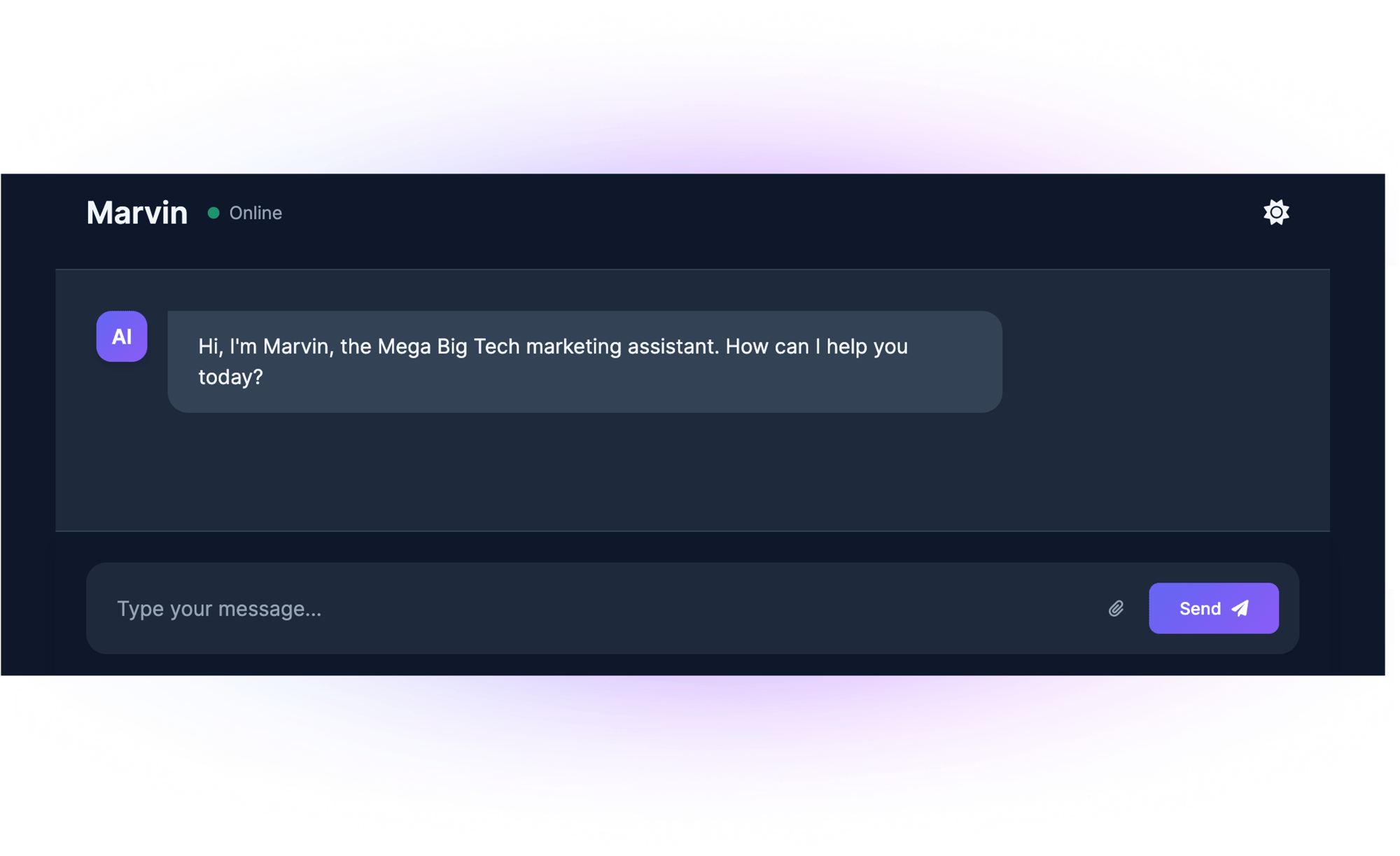
Exploit and defend against prompt injection, jailbreaks, and LLM manipulation techniques
Prompt injection is the most critical vulnerability class in LLM-powered applications. Our training covers direct and indirect prompt injection, jailbreak techniques, system prompt extraction, and context manipulation attacks. Your team will learn to build robust input validation, implement output filtering, design secure system prompts, and deploy guardrails that prevent unauthorized actions. Labs include hands-on exploitation of vulnerable chatbots, RAG poisoning scenarios, and building defense-in-depth architectures for production LLM deployments.
Test real incident response on an AI-enabled breach with PromptStorm
PromptStorm is a live cyber range where you defend against an AI-enabled breach as it unfolds. You take on a realistic incident across LLM-backed applications and the cloud around them, triaging alerts, tracing the attacker through prompts, tool calls, and logs, and containing the damage before it spreads. It is built for blue teams, SOC analysts, and incident responders who want real reps against AI-driven attacks instead of tabletop theory. Everything runs on infrastructure that behaves like production, so what you practice transfers straight to the systems you defend.
Secure RAG architectures, AI agents, API integrations, and chatbot deployments
As organizations integrate AI into production applications, new attack surfaces emerge at every integration point. Our training covers secure architecture patterns for retrieval-augmented generation systems, AI agent safety and tool-use controls, API security for LLM endpoints, and chatbot deployment hardening. Your team will learn to implement proper authentication and rate limiting for AI APIs, prevent data leakage through model outputs, secure vector databases and embedding pipelines, and design monitoring systems that detect anomalous AI behavior. Labs include building secure RAG applications, testing AI agent boundaries, and implementing content filtering pipelines.
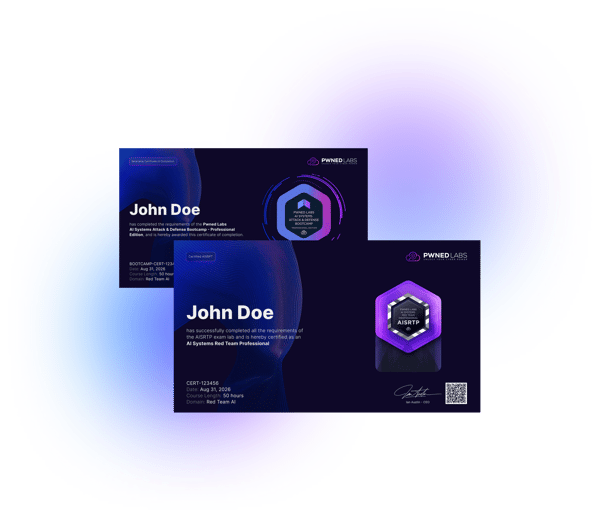
Prove your skills with the AISRTP certification
The AI Systems Red Team Professional (AISRTP) is a hands-on certification you earn by operating against live LLM-backed and agentic systems, not by answering multiple choice. It proves you can chain prompt injection, RAG and tool abuse, and excessive agency into a working exploit, then read the telemetry that catches it. AISRTP is earned through the AI Systems Attack and Defense bootcamp, so the path from learning the tradecraft to proving it runs as one continuous track.
Attack and defend AI agents, tool use, and MCP integrations
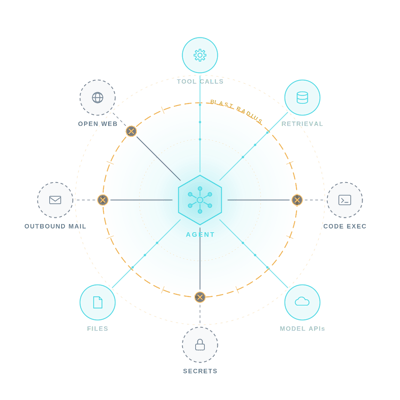
AI agents do not just answer. They act. They call tools, run code, read files, query model APIs, reach out to the web, and hold secrets. That reach is the blast radius. A single prompt injection or one abused tool can turn a weak input into cascading actions across everything the agent can touch. In hands-on labs you attack agentic systems the way real adversaries do, through indirect prompt injection, tool and function abuse, and excessive agency across MCP-connected tool servers and CI/CD agents. Then you switch sides and contain the blast radius with least privilege, tool allow-lists, and telemetry that catches an agent doing something it never should.